The Research Support Core (RSC) supports colony surveillance and nonhuman primate research for investigators at the SNPRC and Texas Biomedical Research Institute, as well as scientists from around the country with these core services:
Laboratory Support
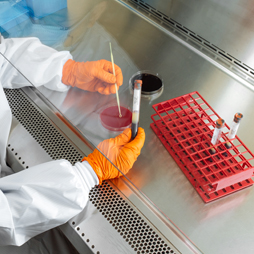
The RSC provides an array of services to support investigator needs including:
- NHP blood, bodily fluid and tissue processing, including PBMC purification, BAL processing, urine/feces/saliva processing, and other services.
- Nucleic acid extraction and TaqMan quantitative RT-PCR and PCR analysis
- Vaccine and test article preparation/validation, with delivery to animal areas.
- Infectious inoculum preparation (BSL2 level pathogens)
- Bacterial culture
- ELISA technology from both kits and built assays.
- Other requests as needed
Flow Cytometry
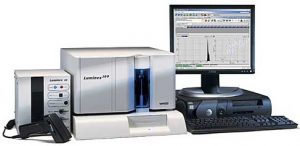
The core provides services for the quantification of multiple cytokines, chemokines and antibodies in biological fluids derived from nonhuman primates. The Luminex system is a bench-top flow cytometer with two low-power laser beams that allows for the simultaneous detection of up to 100 tests in a single sample.
Flow Cytometry PageSerological Surveillance
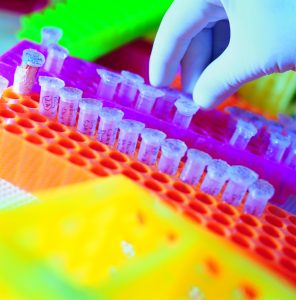
The RSC provides ELISA and Luminex technology to screen several pathogenic agents for colony health surveillance. This includes a Luminex panel for the detection of NHP antibodies against SIV, SRV, STLV, HB, Measles, and COVID (including SAR-CoV-2), as well as against Chagas and TB.
SNPRC Diagnostic Microbiology Lab
SNPRC diagnostic microbiology lab provides diagnostic microbiology support to Non-human primate colonies at SNPRC. It is involved in development, validation, and application of molecular diagnostic methods to detect and characterize various pathogens associated with clinical illness in nonhuman primate colonies. Developed assays are used to detect and characterize pathogens in clinical samples from NHP colonies and also as a screening assay for animal health assessment before the sale or purchase of animals at SNPRC.
Following PCR assays are available to detect pathogens in clinical samples:
| Sl no. | Tests and targets | Name of the test | Type of sample |
| 1 | PCR to detect Escherichia. coli | E. coli PCR | Rectal/Fecal swab/fresh fecal sample/tissue/FFPE |
| 2 | PCR to detect Salmonella | Salmonella PCR | Rectal/Fecal swab/fresh fecal sample/tissue/FFPE |
| 3 | PCR to detect Shigella | Shigella PCR | Rectal/Fecal swab/fresh fecal sample/tissue/FFPE |
| 4 | PCR to detect Campylobacter jejuni | C. jejuni PCR | Rectal/Fecal swab/fresh fecal sample/tissue/FFPE |
| 5 | PCR to detect Campylobacter coli | C. coli PCR | Rectal/Fecal swab/fresh fecal sample/tissue/FFPE |
| 6 | Multiplex PCR to characterize E. coli Enteropathogenic/Enterohemorrhagic/Shigatoxigenic E. coli | E. coli characterization PCR | Rectal/Fecal swab/fresh fecal sample/tissue/FFPE |
| 7 | PCR to detect Pseudomonas aeruginosa | P. aeruginosa PCR | Rectal/Fecal swab/fresh fecal sample/tissue/FFPE |
| 8 | PCR to detect baboon specific Simian Adenovirus | AdenovirusPCR | Nasopharyngeal swab |
| 9 | Duplex PCR to detect and characterize Yersinia enterolitica | Y. enterocolitica PCR | Rectal/Fecal swab/fresh fecal sample/tissue/FFPE |
*FFPE – Formalin Fixed Paraffin embedded tissues
General Service Inquiries form
Please fill out the form below for general inquiries We will be in touch shortly (please allow 24-48 hours for a response)